Teen Patti Master Online Games: Popular Game Modes Explained
Walk into a family Teen Patti game and you’ll usually play one version: the classic one. Open an online app and you’re suddenly looking at a menu of modes with names like Muflis, Joker and AK47. For a beginner, that menu can be confusing. Is Muflis harder? Is AK47 luckier? Should you try them all at once? This guide explains the popular modes, how each one changes the rules and the strategy, and which ones are sensible to start with. Mode names and exact rules vary between apps, so always read the table description before you sit down.
Why Modes Exist
The classic game is simple and satisfying, but after hundreds of hands, some players want variety. Modes change one thing, such as how hands are ranked, which cards are wild, or how many cards you hold, and that small change shifts the whole feel of the game. Betting, boots, blind and seen play, and the show usually work the same way. What changes is which hands are strong and how you should think about them.
1. Classic Teen Patti
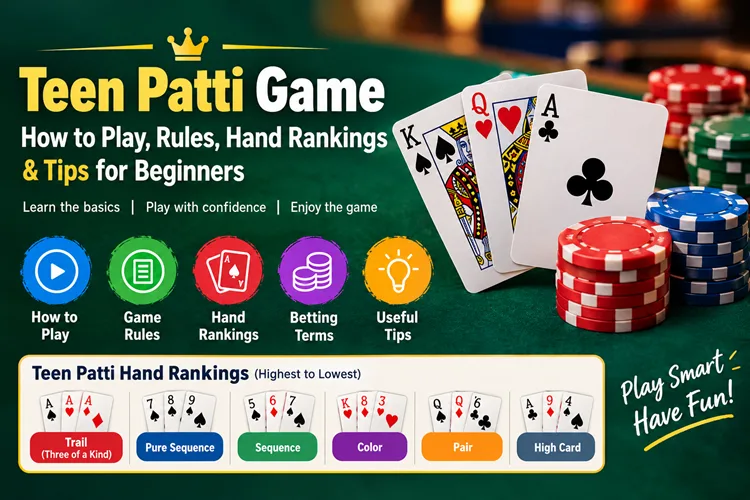
How it works: Three cards each, standard rankings (Trail, Pure Sequence, Sequence, Color, Pair, High Card), and the best hand wins at the show.
What it feels like: Balanced and readable. About three out of four hands are a plain high card, so patience and folding matter a lot. Strong hands are rare, which makes a big bet more meaningful.
Best for: Everyone, especially beginners. Every other mode builds on this one, so it’s worth getting comfortable here first.
2. Muflis (Lowball)
How it works: The ranking is reversed, so the lowest hand wins. In most versions, A-2-3 is the strongest hand, and a high pair or three Kings is far less impressive than it would be in classic play. Details vary: some apps ignore sequences and colors when ranking low hands, and others keep their own rules.
What it feels like: Backwards, at first. Your instincts from classic Teen Patti will keep pulling you the wrong way. A hand you’d happily bet on in classic might be a fold here.
Strategy notes: Mentally flip your hand evaluation. Low, uncoordinated cards are your friend, and pairs and high cards are a problem.
Best for: Players who already know the classic rankings and want a twist. Practice before playing for meaningful stakes.
3. Joker
How it works: One or more cards are designated as jokers, or wild cards, and can stand in for any card you need. The joker may be chosen at random each round, and in some versions it’s revealed before betting. Apps handle the details differently.
What it feels like: More volatile. With wild cards in play, pairs and trails become much more common, so an ordinary pair loses much of its value.
Strategy notes: Raise your standards. A hand that would be strong in classic play may be average here. Pay attention to how the app defines the joker and whether other players can see it.
Best for: Players who enjoy swingier, faster-moving rounds.
4. AK47
How it works: Aces, Kings, 4s and 7s act as wild cards (the name comes from those four ranks, A, K, 4 and 7). With sixteen wild cards in the deck, strong hands appear constantly.
What it feels like: Lively and unpredictable. Trails and pure sequences show up far more often than in the classic game, so a decent-looking hand can easily be beaten.
Strategy notes: Because wild cards inflate every hand, be cautious with hands that would be strong in classic play. Pay close attention to the size of bets, since someone raising hard is more likely to hold a real monster.
Best for: Players already comfortable with betting rhythms who want a faster, wilder game.
5. Best of Four
How it works: You receive four cards instead of three and must build the best three-card hand from them, setting one card aside. Standard hand rankings apply.
What it feels like: More thoughtful. You get more flexibility, which means stronger hands are somewhat more likely, and your decision includes choosing which card to drop.
Strategy notes: Look at all possible three-card combinations before betting. Hands that look ordinary at first glance might hide a sequence or a color. Rules for how and when you arrange your hand vary, so read the instructions.
Best for: Players who enjoy a little puzzle-solving alongside the betting.
6. Hukam and Other Variants
Some apps include modes where a card is chosen as a trump or wild card for the round, or where the dealer or winner of the previous round influences the rules. Others add formats with shorter betting rounds, side pots, or tournament structures. Because these variants differ widely, treat each one as its own game, and read the in-app rules before playing.
Quick Comparison
| Mode | Key difference | Feels like |
|---|---|---|
| Classic | Standard three-card rankings | Balanced, patient |
| Muflis | Lowest hand wins | Backwards at first |
| Joker | Wild card(s) in play | Volatile |
| AK47 | A, K, 4, 7 are wild | Fast, high-scoring hands |
| Best of Four | Four cards, best three used | Thoughtful |
How to Choose a Mode
Start with classic. You’ll learn the rankings, betting and pacing without extra complications.
Add one mode at a time. Try each new mode on practice or low-stake tables first. Switching to a new mode and raising your stakes on the same day is a recipe for expensive mistakes.
Match the mode to your mood. If you want a calm, strategic evening, classic or Best of Four fits. If you want fast and unpredictable, try Joker or AK47.
Adjust your hand values. In any wild-card mode, a “good” hand is relative. Recalibrate before you bet.
Habits That Apply to Every Mode
- Read the mode rules every time. Names are similar across apps but the details differ.
- Fold weak hands. This holds in every mode, whatever counts as weak.
- Bluff sparingly. The principle is the same everywhere.
- Watch opponents’ behavior. Speed, blind frequency and betting changes reveal habits.
- Mind the timer. Turns are timed in most apps.
Playing Responsibly
New modes can be exciting, and fast modes can make money and time disappear quickly. Set a budget and time limit before you play, never chase losses, and treat spending as the cost of entertainment. Be careful with bonuses or event promotions, and read the terms first. If you notice warning signs such as borrowing to play or hiding your activity, take a break and talk to someone you trust. Our Responsible Gaming page has more guidance. Download only from official sources and never share OTPs or passwords. Players must be 18 or older, and laws on online card games, especially real-money play, vary by country and state, so check your local rules.
Final Thoughts
Each mode is the same game wearing a different outfit. The betting, the psychology and the importance of patience stay constant, while the definition of a strong hand shifts. Learn classic first, add modes gradually, always check the rules, and keep your limits firm. Variety is a great way to keep the game interesting, as long as you stay in control of how much you play and spend.
Frequently Asked Questions
What are the most popular Teen Patti game modes?
Classic, Muflis, Joker, AK47 and Best of Four are the most common, though names and details differ between apps.
Which mode is best for beginners?
Classic Teen Patti. It has the standard rankings and betting, and every other mode builds on it.
How does Muflis work?
The ranking is reversed, so the lowest hand wins. In many versions A-2-3 is the best hand, but rules differ by app, so read the details first.
What are wild cards in Joker mode?
Wild cards, or jokers, can stand in for any card you need. Which cards are wild, and whether they’re revealed, depends on the app.
Why is AK47 called AK47?
The name refers to the ranks that act as wild cards: Ace, King, 4 and 7.
Is AK47 luckier than classic Teen Patti?
It tends to feel more unpredictable, because wild cards make strong hands common. Skill still matters in reading bets and judging hand strength.
How does Best of Four differ from classic?
You receive four cards and use the best three, setting one aside. It gives you more options and adds a decision about which card to drop.
Do betting rules change between modes?
Usually the betting structure stays the same, with a boot, blind and seen play, chaal, raise, pack and show. But some modes add extra rules, so read each mode’s description.
Should I raise my stakes when I try a new mode?
No. Try new modes at practice or low-stake tables first, until you understand how hand values change.
Is online Teen Patti legal?
That depends on where you live. Laws vary, particularly for real-money play, so check your local regulations before you begin.