
A Beginner’s Guide to Playing Teen Patti Online
Teen Patti, which translates to “three cards” in Hindi, is one of the most beloved card games across South Asia. Rooted in the British game of three-card brag, it has evolved into a cultural mainstay during festivals like Diwali, family get-togethers, and casual evenings with friends. In recent years, the game has made a smooth transition to smartphones and computers, letting players enjoy it from virtually anywhere. If you’re new to the online version, this guide walks you through everything you need to know to get started with confidence.
Understanding the Basics
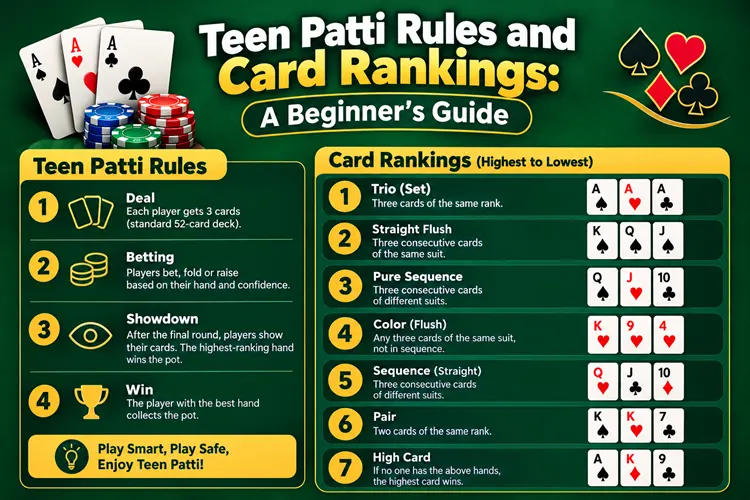
Teen Patti is played with a standard 52-card deck (no jokers) and typically involves three to six players, though online platforms sometimes support more through multiplayer tables. Each player is dealt three cards face-down, and the goal is simple: have the best three-card hand, or convince your opponents to fold before the showdown.
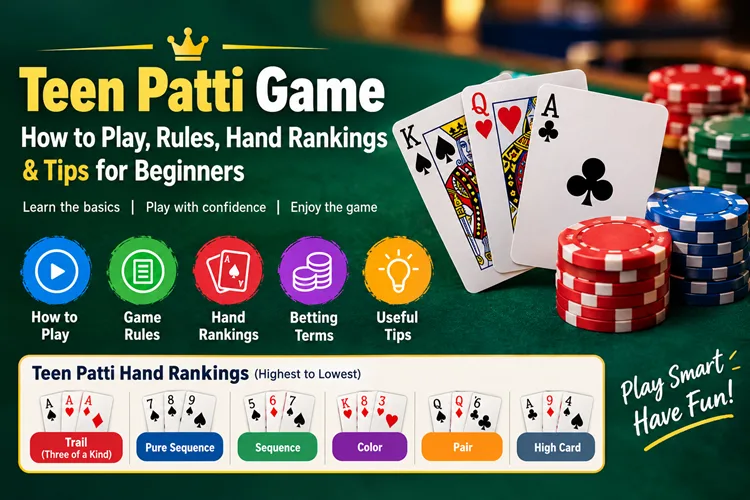
The hand rankings, from highest to lowest, are:
- Trail or Set – three cards of the same rank (e.g., three sevens)
- Pure Sequence – three consecutive cards of the same suit
- Sequence (Run) – three consecutive cards of mixed suits
- Color – three cards of the same suit, not in sequence
- Pair – two cards of the same rank
- High Card – the highest single card when no other combination applies
Understanding this hierarchy is the foundation of every decision you’ll make at the table.
How a Round Works
Before cards are dealt, players contribute a “boot amount,” a small mandatory stake that forms the initial pot. Play then moves clockwise, with each player choosing to bet, raise, or fold. Players can view their cards (“playing chaal” or seen play) or keep them hidden and play blind, which typically requires a smaller bet than seen play but carries more risk since you don’t know your hand’s strength.
The round continues until only one player remains, or until a showdown occurs between the last two active players, where the better hand takes the pot. Many online versions also include side pots, side shows (where two players privately compare hands), and variations like Muflis (lowest hand wins) or AK47 (specific cards act as wild cards), which add strategic depth once you’ve mastered the basics.
Getting Started Online
Most Teen Patti platforms, whether standalone apps or sections within larger gaming apps, offer a similar onboarding flow:
- Create an account using your phone number or email.
- Choose a table based on stakes, often starting with free chips or a small welcome bonus for practice.
- Learn the interface, which usually includes buttons for seen/blind play, pack (fold), and chat or emoji reactions to interact with other players.
- Start with lower-stake tables to get comfortable with the pacing and interface before moving to higher-stakes games.
Many apps also offer practice modes with virtual currency, which is a smart way to learn the rhythm of the game without financial pressure.
Tips for Beginners
Patience is your greatest asset early on. New players often play too many hands out of excitement, which drains their chip stack quickly. Watching how opponents bet, whether they play blind frequently or fold at the first sign of pressure, can reveal patterns you can exploit later. Bluffing is a core part of Teen Patti, but it works best when used sparingly and unpredictably rather than as a constant strategy.
It’s also worth setting a personal budget before you begin any session, and treating losses as part of the entertainment cost rather than something to chase. Reputable platforms include responsible gaming tools like deposit limits and self-exclusion options, which are worth exploring if you play regularly.
A Note on Real-Money Play
Many online Teen Patti platforms offer both free-to-play and real-money formats. Laws around real-money gaming vary significantly by country and even by state or region within countries, so it’s essential to check local regulations before wagering actual money. Choosing licensed, transparent platforms and playing within your means will make the experience far more enjoyable and far less risky.
Final Thoughts
Teen Patti’s blend of simplicity, psychology, and controlled risk is what has kept it popular for generations, and its online adaptation has only broadened its reach. As a beginner, focus on learning hand rankings, practicing patience, and using free or low-stake tables to build your instincts before venturing further. With time, you’ll develop a feel for reading opponents and making sharper decisions round after round.
Frequently Asked Questions
Is Teen Patti the same as poker?
Not exactly. While both are card games involving betting and bluffing, Teen Patti uses only three cards per player and has its own distinct hand rankings and betting structure, making it faster-paced than most poker variants.
Can I play Teen Patti online for free?
Yes, most platforms offer free-play modes using virtual chips, which is an excellent way for beginners to learn the rules and practice strategy without financial risk.
Is playing Teen Patti online legal?
This depends heavily on your country and, in some cases, your specific state or region. Regulations around real-money card games vary widely, so it’s important to research local laws before playing with actual money.
What does “blind” and “seen” mean?
Playing blind means betting without looking at your cards, usually at a lower cost, while playing seen means you’ve viewed your hand before betting, which typically requires a higher stake.
How much money can I lose?
That depends entirely on how you manage your stakes. Setting a strict budget before playing and sticking to it is the best way to keep the game enjoyable and within your control.
What’s the best strategy for beginners?
Start slow, observe other players’ betting patterns, avoid frequent blind play until you’re comfortable, and don’t be afraid to fold weak hands early rather than chasing losses.
Are there different variations of Teen Patti?
Yes, popular variants include Muflis (where the lowest hand wins), AK47 (certain cards act as wild cards), and Joker variants, each adding new layers of strategy once you’ve mastered the classic version.