
Things Beginners Should Know Before Playing Teen Patti Online
Almost everyone’s first online Teen Patti session goes the same way. You download an app, tap into a table because the chips look friendly, and within five minutes you’ve folded three hands, bet on a fourth without really knowing why, and wondered where your starting balance went. It’s not a disaster, but it’s avoidable. A little preparation makes the game far more enjoyable. Here’s what’s worth knowing before you sit down at your first virtual table.
Learn the Hand Rankings First
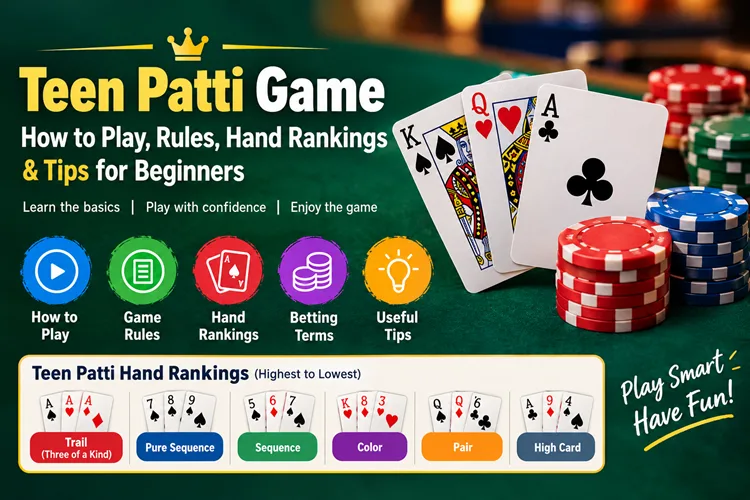
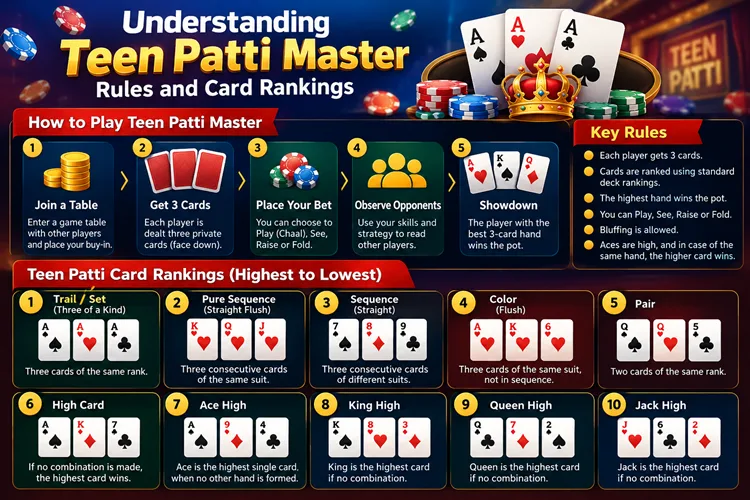
Before anything else, memorize the order of hands. It’s the one thing you can’t improvise. From strongest to weakest:
- Trail (Set): three cards of the same rank
- Pure Sequence: three consecutive cards of the same suit
- Sequence: three consecutive cards of mixed suits
- Color: three cards of the same suit, not in order
- Pair: two cards of the same rank
- High Card: none of the above
A simple way to remember it: the harder a hand is to get, the higher it ranks. If you can recite this list without thinking, you’ve already got an edge over many new players who keep checking the rules mid-hand.
Understand Blind and Seen Play
Teen Patti has a feature that surprises many beginners: you can bet without looking at your cards. This is called playing blind, and it usually costs less per bet. Once you look at your hand, you’re playing seen, and your bets are typically higher.
Blind play can be a clever way to stay in a round cheaply, but it’s also a gamble, because you don’t know whether your hand is strong or hopeless. As a beginner, it’s wise to look at your cards early until you’re comfortable with how the betting scales. Experiment with blind play later, once you can judge risk instinctively.
Know What “Pack,” “Chaal,” and “Show” Mean
Online apps use game terms freely, and the buttons can feel cryptic at first. The basics:
- Pack: fold your hand and leave the round
- Chaal: place a bet to stay in
- Raise: increase the stake
- Show: when two players remain, a request to reveal and compare hands
- Side show: a private comparison between two seen players
Spend a few minutes in the app’s help section or a practice table before you play. Accidentally tapping the wrong button in a live round is one of the most common beginner mistakes, and it can be an expensive one.
Start With Practice or Low-Stake Tables
Nearly every platform has some form of free or low-stake play. Use it. Treat your first sessions as lessons, not competitions. Watch how rounds unfold, how often people fold, and what usually wins at showdown. Within a few sessions you’ll start to notice a rhythm you can’t get from reading rules alone.
It’s tempting to jump into higher stakes because the pots look exciting, but bigger tables tend to have more experienced players, and mistakes cost more. Move up gradually, only when you feel you’ve earned it.
Set a Budget and a Time Limit Before You Start
This is the single most important habit, and the one beginners most often skip. Online play is fast. Chips look like numbers, rounds finish in a minute, and an hour can vanish without notice.
Before you log in, decide:
- How much you’re willing to spend, an amount you could lose without it affecting your bills, savings, or mood
- How long you’ll play, and set a timer to enforce it
Treat any spending as the cost of entertainment, like a movie ticket. And if you lose your budget for the day, stop. Chasing losses with bigger bets is how small setbacks become big ones.
Be Patient With Your Hands
New players often feel they have to play every hand. You don’t. In Teen Patti, folding weak cards is not cowardice; it’s strategy. A beginner who folds early on poor hands and plays only when the cards justify it will usually outlast a beginner who plays everything.
Remember too that money already in the pot is gone whether you stay or fold. The real question is always whether the next bet is worth making, not whether you’ve “invested too much to quit.”
Don’t Overdo the Bluffing
Bluffing is part of the game’s charm, but it’s not a plan on its own. If you bluff constantly, experienced opponents will spot it quickly and call you out. A bluff works best when it’s occasional, believable, and tied to how you’ve been betting. Until you understand how people around you play, focus on solid decisions rather than dramatic ones.
Watch Your Opponents’ Habits
You can’t see anyone’s face online, but you can see their behavior. Notice who plays blind often, who raises quickly, who folds at the slightest pressure, and who only stays in for strong hands. These patterns repeat, and spotting them is how you gain an advantage over time. Keep it casual in the beginning. Even noticing one or two habits per session builds good instincts.
Choose Your Platform Carefully
Not every app is equally trustworthy. Before you create an account:
- Read the terms and conditions, especially around payments and withdrawals
- Check reviews from other players, not just the app store rating
- Download only from official sources rather than links shared on social media or messaging apps
- Look for clear support channels you can contact if something goes wrong
- Never share OTPs, passwords, or card details with anyone claiming to be support
Also remember that independent guides like this one cannot access or fix your account. For account or payment issues, you’ll need the app’s own official support.
Check the Law Where You Live
Rules around online card games, especially those involving real money, vary widely between countries and even between states. Some places allow them, some restrict them, and some are unclear. It’s your responsibility to check local regulations before you play, and to stay away from anything not permitted in your area. Also note that most platforms are strictly for adults aged 18 and above.
Keep It Fun
Teen Patti started as a game for festivals, family evenings, and laughter with friends. That spirit is worth holding on to. If you notice yourself feeling anxious, hiding your play, or playing to escape stress, take a break and look at responsible gaming resources. A game should add to your day, not weigh on it.
Final Thoughts
Before you play your first hand online, you don’t need to be an expert. You need to know the rankings, understand the basic buttons, begin at low stakes, set a budget, and pick a platform you trust. Everything else, the instincts, the reading of opponents, the sense of when to bluff, grows with experience. Take it slowly, enjoy the process, and let the game come to you.
Frequently Asked Questions
What should I learn first as a Teen Patti beginner?
Start with the hand rankings, from Trail at the top down to High Card. Once those are second nature, learn how blind and seen betting work.
Should beginners play blind or seen?
Most beginners are better off playing seen until they understand the betting structure. Blind play is cheaper but riskier because you don’t know your hand.
Can I practice without spending money?
Yes. Many apps offer free chips or practice tables. These are ideal for learning the interface and the rhythm of the game without financial pressure.
How much should I spend when I’m starting out?
Only what you can comfortably afford to lose, and set that figure before you start. Think of it as entertainment spending, never as a way to make money.
Is it okay to fold a lot?
Absolutely. Folding weak hands is one of the smartest habits a beginner can build. It protects your chips and lets you stay in the game longer.
How do I know if a Teen Patti app is trustworthy?
Download only from official sources, read the terms and user reviews, check for clear support options, and never share personal codes or passwords. If something feels unclear, choose a different platform.
Is online Teen Patti legal everywhere?
No. Laws differ by country and region, particularly for real-money play. Always check your local regulations before you begin.
What’s the biggest mistake beginners make?
Usually it’s playing too many hands, raising stakes too quickly, and chasing losses. Patience, a clear budget, and early practice avoid most of these problems.