How Online Teen Patti Master Games Differ From Traditional Card Games
Anyone who grew up around Teen Patti remembers the setting more than the cards: a bedsheet spread on the floor, cousins arguing over the boot amount, someone’s uncle claiming he “never bluffs” while bluffing every second hand. It was loud, social, and full of theatre. Now the same game lives on our phones, and apps like Teen Patti Master let you sit at a table in seconds. The rules are familiar, but the experience is different in ways that surprise many new players. Here’s a plain look at what changes when the game moves from the living room to the screen, and what stays exactly the same.
The Table Itself
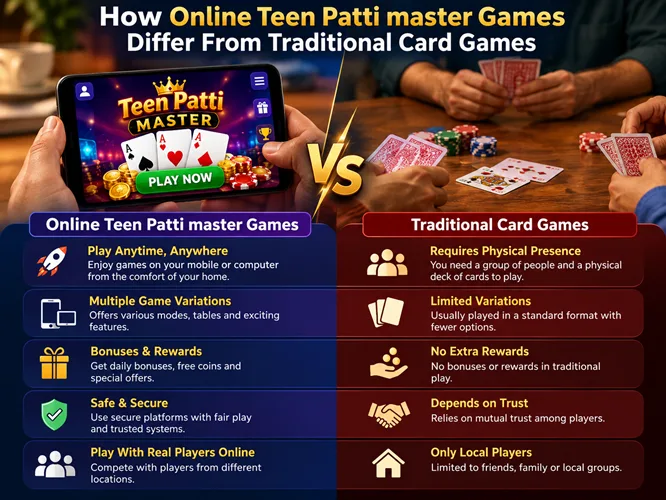
A traditional game needs people in one place at one time. You wait for enough players, find a deck with all 52 cards, and agree on stakes before anything begins. Online, none of that applies. You open the app, pick a table, and the cards are dealt within moments. Whether it’s a lunch break, a long commute, or a quiet late evening, a game is almost always available.
The flip side is that the personal side shrinks. You’re no longer sitting across from people you know. Your opponents might be strangers from other cities, represented by a username and an avatar, and that changes how the game feels.
Shuffling, Dealing and Fairness
At a physical table, shuffling and dealing depend on human hands. Players watch each other for a reason. A sloppy shuffle, a peeked card, or a “misdeal” can lead to arguments, and trust in the person dealing matters a lot.
Online games replace this with software. Cards are generated and distributed by an algorithm, usually described as a random number generator, and the dealing happens instantly. In theory this removes human error and sleight of hand. In practice, it also means you’re trusting the app rather than the person across from you, which is why it’s worth sticking to well-known, transparent platforms and reading their terms before you play.
Speed and Pace
Traditional Teen Patti moves at the speed of conversation. Players talk, tease, take their time, and sometimes pause the game altogether for tea or an argument. Online rounds are faster. Turns usually come with timers, and if you hesitate too long the app may fold your hand automatically.
That quicker rhythm means more hands per hour, which also means more decisions, more chances to win, and more chances to lose. Beginners often underestimate this. Setting a time limit before you start is a good habit, because an online session can slip by much faster than an evening around a real table.
Reading Opponents: Faces vs. Behavior
Much of the charm of the physical game lies in reading people: the nervous cough, the tapping finger, the suspiciously relaxed smile. Online, you lose all of that. No one can see your face, so your poker face is automatically perfect.
What replaces it is behavioral reading. Experienced online players pay attention to:
- How quickly someone acts. A very fast raise might signal confidence, or a deliberate act.
- How often they play blind. Frequent blind players are either bold or careless.
- When they fold. Consistent early folding suggests a cautious style.
- Their betting patterns over several rounds, not just a single hand.
It’s a different skill, more about patterns than instincts, but it’s every bit as interesting once you start noticing it.
Variations at Your Fingertips
At a home game, you usually play whatever version everyone knows, often classic Teen Patti and perhaps Muflis if someone insists. Online apps typically offer a menu of variants such as Joker, AK47, Muflis, and Best of Four, each with its own rules. This is a great way to learn, but it can also be confusing. Always check how a mode works before you join a table, because a rule you assumed from the classic game may not apply.
Stakes, Chips and Money
Physical games often run on small coins, notes, or even matchsticks, and the group naturally sets informal limits. Everyone can see how much is in the pot and how much each person has left.
Online, the money becomes numbers on a screen, which can make spending feel less real. Chips go up and down quickly, and it’s easy to lose track. This is exactly why responsible habits matter so much. Decide your budget before logging in, treat it as entertainment spending, and don’t chase losses. If real-money play is involved, check the laws in your region first, as regulations differ widely.
Social Experience
A traditional game is as much about the people as the cards: shared snacks, family stories, and playful rivalry. Online games try to recreate this through chat, emojis, and friend tables, and these features can be fun, especially for friends living in different cities. But a quick emoji is not the same as a roaring laugh across the room. If the social side matters most to you, consider playing in private tables with people you know, and keep the open lobby for casual practice.
What Stays the Same
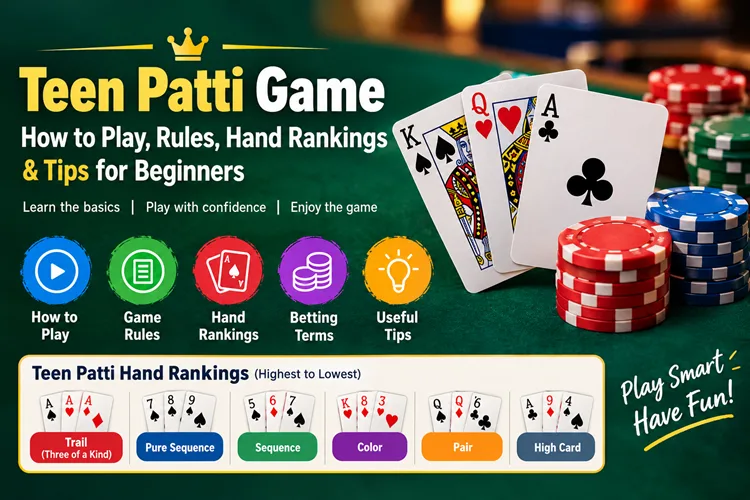
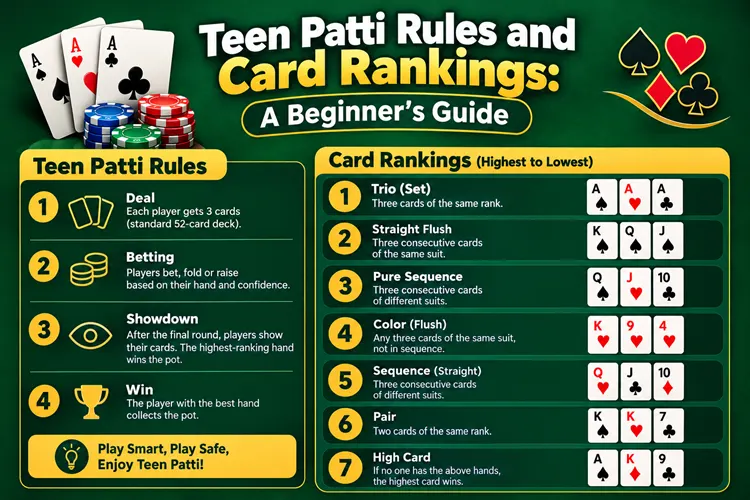
Despite the differences, the heart of Teen Patti hasn’t changed. The hand rankings, from Trail down to High Card, work exactly as before. The mix of luck and judgment is the same. And the thrill of holding a middling hand while everyone else folds still feels wonderful, whether you’re on a sofa or a screen.
Final Thoughts
Online Teen Patti isn’t a replacement for the traditional game; it’s another way of enjoying it. You gain convenience, variety, and speed, and you give up some of the warmth and human theatre. Knowing the differences helps you play smarter: slow down your decisions, study opponents’ habits, manage your budget, and pick your tables with care. Do that, and you’ll enjoy the best of both worlds.
Frequently Asked Questions
Are the rules of online Teen Patti the same as the traditional game?
The core rules and hand rankings are identical. The main differences are in extras like timers, automatic folding, and the many game variations offered by apps.
Is online Teen Patti fair?
Reputable apps use random number generators to deal cards, which aims to keep results unbiased. Still, fairness depends on the platform, so choose well-known apps and read their terms and reviews before playing.
Why do online games feel faster?
Dealing is automatic, there’s no shuffling or chatting, and turn timers keep play moving. This means you’ll see far more hands in the same amount of time.
How can I read opponents when I can’t see them?
Focus on behavior, such as how quickly they bet, how often they play blind, and when they tend to fold. Patterns over several rounds are more useful than any single move.
Can I play with friends online?
Many apps offer private or friend tables where you can invite people you know. It’s a good way to keep the social feel of the traditional game.
Is it easier to overspend online?
It can be, because chips and balances are just numbers on a screen. Setting a budget and time limit before you begin, and sticking to them, is the best protection.
Is playing online Teen Patti legal?
That depends on where you live. Laws about real-money games vary by country and even by state, so check your local regulations before playing for money.
Is online Teen Patti suitable for beginners?
Yes, especially if you start with practice or low-stake tables. Learn the hand rankings first, observe a few rounds, and take your time before moving to bigger tables.