Teen Patti Master Game Strategy: How Beginners Can Improve Their Gameplay
Ask a beginner how to get better at Teen Patti and you’ll usually hear “get better cards.” Fair enough, but you can’t control the deal. What you can control is almost everything that happens afterward: which hands you play, how much you bet, when you fold, and how closely you watch the people around you. Strategy in Teen Patti isn’t about secret tricks. It’s about making a steady run of sensible decisions while luck does whatever it does. Here’s a practical way to build that skill, step by step.
One honest note first: no strategy guarantees winning, because the cards are random and every session has swings. The aim is to play smarter, lose less when luck is against you, and enjoy the game more.
Build the Foundation
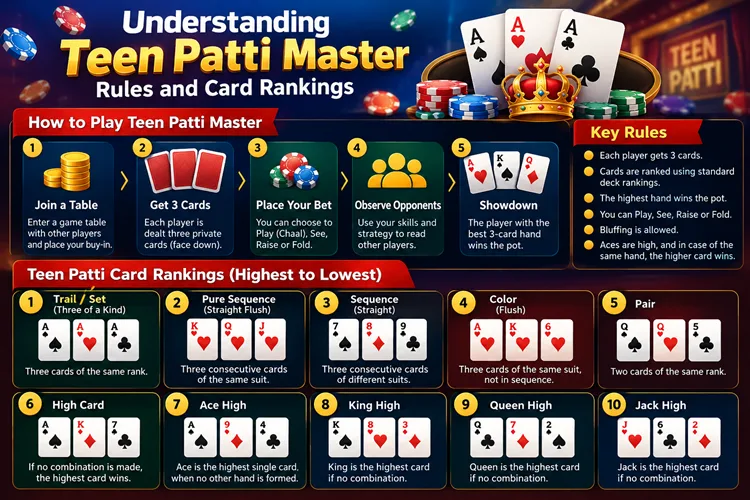
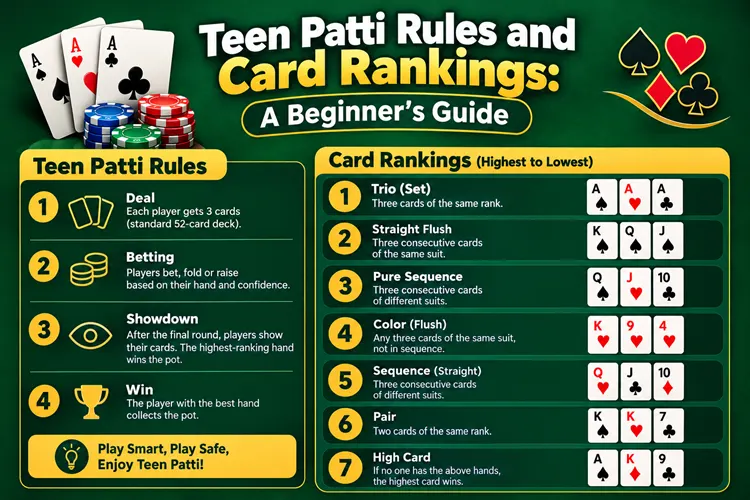
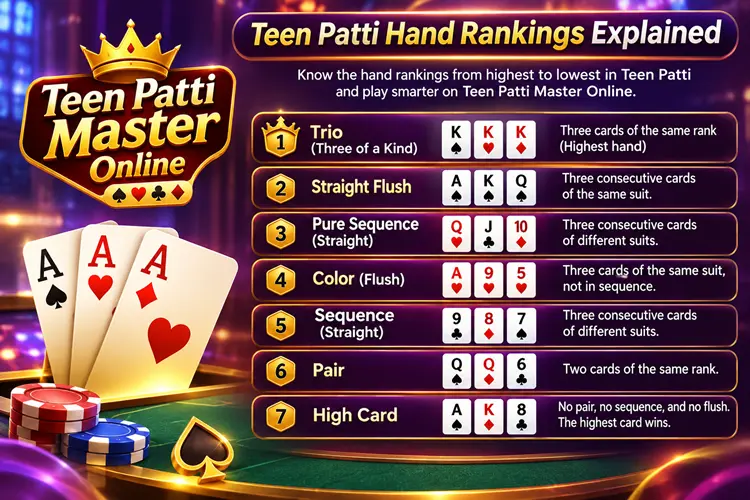
Know the rankings without thinking. Trail, Pure Sequence, Sequence, Color, Pair, High Card. If you have to pause and recall the order, you’re already behind. Practice at free tables until you can name your hand the instant you see it.
Understand the odds in plain terms. Out of every four hands you’re dealt, about three will be a plain high card. Pairs show up roughly one time in six. Sequences, colors and trails are rare. The lesson is simple: most of your hands are weak, so a good strategy begins with a willingness to fold.
Strategy 1: Be Selective
The single biggest improvement a beginner can make is playing fewer hands. Strong players aren’t brave, they’re patient. They let weak hands go cheaply and save their chips for situations where the odds favor them.
A rough guide for classic Teen Patti:
- Trail, Pure Sequence, Sequence: Strong. Bet with confidence, while still watching for signs that someone holds something better.
- Color: Good, but beatable by sequences. Play it, but don’t treat it as unbeatable.
- High pair (Jacks or better): Decent. Worth playing unless the betting turns very aggressive.
- Low pair: Playable in cheap rounds, risky when raises pile up.
- High card hands: Usually fold, unless the bet is small and you have a clear reason to stay, such as a strong top card against cautious opponents.
Adjust this for the mode. In wild-card modes like Joker and AK47, strong hands are far more common, so a pair loses value. In Muflis, the ranking is reversed.
Strategy 2: Treat Sunk Costs as Gone
Beginners often stay in a hand because they’ve already put chips in. But chips in the pot are gone whether you stay or fold. The only question that matters is whether the next bet is worth making on its own. If the answer is no, pack. This one habit saves more chips than almost any clever trick.
Strategy 3: Use Blind and Seen Play Deliberately
Playing blind is cheaper per bet, which makes it tempting. But you’re betting without knowing your cards, and about three-quarters of the time those cards will be weak.
For a beginner:
- Default to seen. Look at your cards early so you can fold weak hands before spending more.
- Use blind play sparingly and on purpose. A cheap blind bet can keep you in a round or mislead an opponent, but make it a decision, not a habit.
- Remember the rule. Once you look, you can’t go back to blind.
Strategy 4: Read Behavior, Not Faces
You can’t see anyone’s expression online, but you can watch how they play. Choose one or two habits per session:
- Speed: Instant raises might signal confidence or autopilot. A sudden pause may mean doubt, or acting.
- Blind frequency: Players who love blind betting are bold, careless, or both.
- Folding patterns: Someone who folds to every raise is cautious. Someone who never folds is hard to bluff.
- Changes in pattern: A cautious player making a big raise deserves respect.
Notes from several rounds beat conclusions from a single hand. A player who bluffs once isn’t necessarily a bluffer.
Strategy 5: Bluff With a Reason
Bluffing is part of the game, but it works because it’s unexpected. A few guidelines:
- Bluff rarely. If you raise all the time, others will learn to call you.
- Pick your targets. Cautious players fold to pressure. Players who never fold just collect your chips.
- Keep your story consistent. A bluff that matches the way you’ve been betting is more believable.
- Don’t bluff out of frustration. After a losing streak, the urge to force a win is strong. That’s usually when a bluff costs the most.
Strategy 6: Use Shows and Side Shows Wisely
A show ends the round, so think about what it costs and what it reveals. Check how your app handles who pays, since rules vary. A side show, a private comparison between two seen players, can save chips but also hands your opponent information. Opponents can usually refuse, and it can’t be used against blind players. Don’t request one automatically.
Strategy 7: Manage Your Bankroll Like It Matters
Many beginners think strategy is about cards. It’s at least as much about money.
- Set a budget before you play, an amount you could lose without affecting bills, savings or mood.
- Set a time limit and use a timer. Online rounds are fast and sessions slip away.
- Break the budget into units. If you only risk a small slice per round, a bad run won’t wipe you out.
- Stop when you hit your limit. Winning back losses is not a plan.
- Treat spending as entertainment, like a movie ticket, never as income.
Remember that some platforms take a fee from pots, so over a long period, the house may collect more than players win. That’s another reason to treat the game as entertainment rather than earnings.
Strategy 8: Review Your Play
After each session, take a minute to ask:
- Did I fold enough weak hands?
- Did I bluff for a reason or out of boredom?
- Did I chase a loss?
- Did I stick to my budget and time limit?
Many apps keep a history of recent hands. Looking back at the ones that cost you most often reveals your biggest leaks.
Strategy 9: Progress Slowly
Practice and low-stake tables are your training ground. Higher tables usually have more experienced players, and mistakes cost more. Move up only when you’ve been playing steadily at your current level, and don’t raise stakes to chase losses.
Strategy 10: Keep Your Head Clear
Emotion damages strategy more than ignorance does. Avoid playing when you’re upset, tired or distracted. Take breaks, stand up, drink water, and step away after a bad run. If you notice warning signs such as borrowing to play or hiding your activity, stop and talk to someone you trust. Our Responsible Gaming page has more guidance.
Finally, stay safe: download only from official sources, never share OTPs or passwords, and use the app’s official support for account problems. Players must be 18 or older, and laws on online card games, especially real-money play, vary by country and state, so check your local rules.
Final Thoughts
Good Teen Patti strategy is surprisingly unglamorous. Fold more, chase less, bluff sparingly, watch behavior, protect your budget, and review your own mistakes. None of it removes luck from the game, but together these habits tilt the odds of enjoying yourself in your favor. Start with one or two, practice them at low stakes, and add more as they become natural.
Frequently Asked Questions
What is the most important strategy for a Teen Patti beginner?
Being selective. About three-quarters of hands are just a high card, so folding weak hands and saving chips for better opportunities is the biggest single improvement.
Can strategy guarantee winnings in Teen Patti?
No. Cards are random, and short-term results can swing widely. Strategy helps you make better decisions and lose less when luck is against you, but it can’t guarantee profit.
Should I play blind or seen?
Beginners are usually better off playing seen so they can fold weak hands early. Blind play is cheaper but riskier, so use it sparingly and on purpose.
How often should I bluff?
Rarely. A bluff works because it’s unexpected. Target cautious players, keep your betting story consistent, and avoid bluffing out of frustration.
How do I read opponents online?
Watch behavior such as speed, blind frequency, folding patterns and sudden changes. Observe over several rounds rather than judging from one hand.
Is a pair a good hand?
It can be, especially a high pair, but it’s not dominant. Pairs lose to sequences, colors and trails, so judge them against the betting.
How should I handle a losing streak?
Take a break, don’t raise your stakes to recover, and stop if you’ve reached your budget. Come back with a clear head.
How do I manage my money while playing?
Set a budget and time limit before you start, risk only a small portion per round, and stop when you reach your limits. Treat spending as the cost of entertainment.
When should I move to higher stakes?
Only after you’ve played steadily at your current level and feel comfortable with the rankings, betting and pacing. Never move up to chase losses.
Does strategy change between game modes?
Yes. In wild-card modes like Joker and AK47, strong hands are common, so a pair is worth less. In Muflis, the lowest hand wins. Always read a mode’s rules first.
Is online Teen Patti legal?
That depends on where you live. Laws vary, particularly for real-money play, so check your local regulations before you begin.